Nitinol Performance Beyond the Drawing
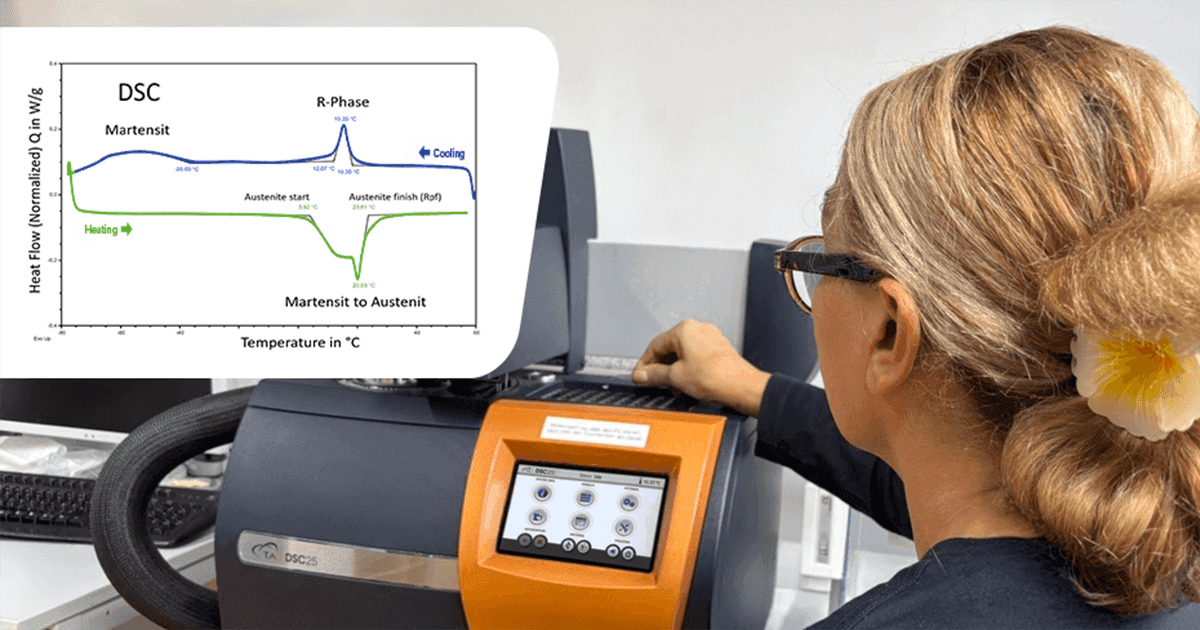
A drawing defines a component’s geometry. For Nitinol, its behavior in use also depends on temperature and loading conditions. The austenite finish temperature (Af) marks the temperature at which the transformation to austenite is completed during heating.
Together with operating temperature and loading conditions, Af helps determine how a component responds to deformation and recovers its shape. For a Nitinol stent operating at body temperature, around 37°C, Af can influence the radial force it delivers.
Shape setting is an important part of controlling this behavior. Heat-treatment parameters determine more than geometry: they can also be used to adjust transformation temperatures.
At MeKo, we draw on our Nitinol processing experience to adjust parameters to the specified Af and verify the result using Differential Scanning Calorimetry (DSC). If your requirements are still taking shape, we can discuss operating conditions and functional targets with you to work toward a suitable specification.
